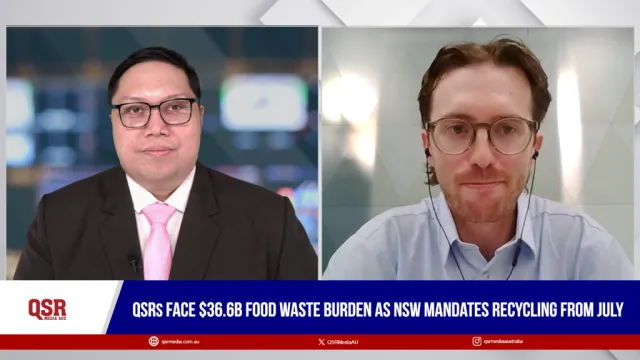
QSRs face $36.6b food waste burden as New South Wales mandates recycling from July
Waste reduction delivers 7-to-1 payback but training gaps and turnover prevent most QSRs from capturing gains.
Australian quick-service restaurant operators are under pressure to measure food waste more closely as rising labour, energy, food and disposal costs increase margin leakage across the supply chain.
Sam Quirk, Research Assistant at RMIT University said operators often underestimate the true cost of food waste by focusing only on disposal. Businesses pay for food when it is purchased, then pay again through preparation, refrigeration, storage and waste removal.
“When we're thinking about food waste, we're not thinking about just that final sort of disposal cost,” Quirk said. “It's the true cost of waste throughout the supply chain.”
Food waste costs Australia $36.6b each year, with QSR businesses exposed because waste is tied to high-volume purchasing and preparation. Quirk said his research did not measure year-on-year cost trends directly, but labour, energy, food purchasing and landfill disposal costs are all rising.
The first step for operators is measurement. “You can't manage what you don't measure,” Quirk said. Businesses that measure waste are more likely to see where it occurs and target reduction efforts.
Training is another gap. Quirk said research found a drop-off between induction training and ongoing training, partly because the QSR workforce skews younger and has higher turnover. Some operators may be reluctant to invest in staff who may not stay long, but waste reduction training can still deliver returns.
He said food waste reduction initiatives have been shown to deliver up to a seven-to-one payback.
Measurement will become more important as New South Wales prepares to introduce business food waste recycling mandates from 1 July. Quirk said forcing businesses to recycle organics could help identify where waste is generated.
A national mandate could extend that effect, though implementation remains uncertain. For QSR operators, the test is whether food waste reduction becomes part of everyday cost control rather than a compliance exercise.








































Commentary
The customer habits you build in a ‘Goldilocks’ market set the tone for what comes next