
How the neuroscience of music shapes the customer experience

With its power to influence emotion, memory, and even behaviour, it’s no secret that music has a deeply profound impact on the human brain. More than just background noise, music is the secret weapon hospitality venues deploy to enhance the customer dining experience, boost mood, evoke nostalgia, complement the flavours of food and drink, and more.
Whether they realise it or not, hospitality venues are utilising music’s mind-altering powers to build a deeper connection with customers - an effect which is firmly rooted in neuroscience.
Where we record experiences and where we experience music occupies the same part of the brain
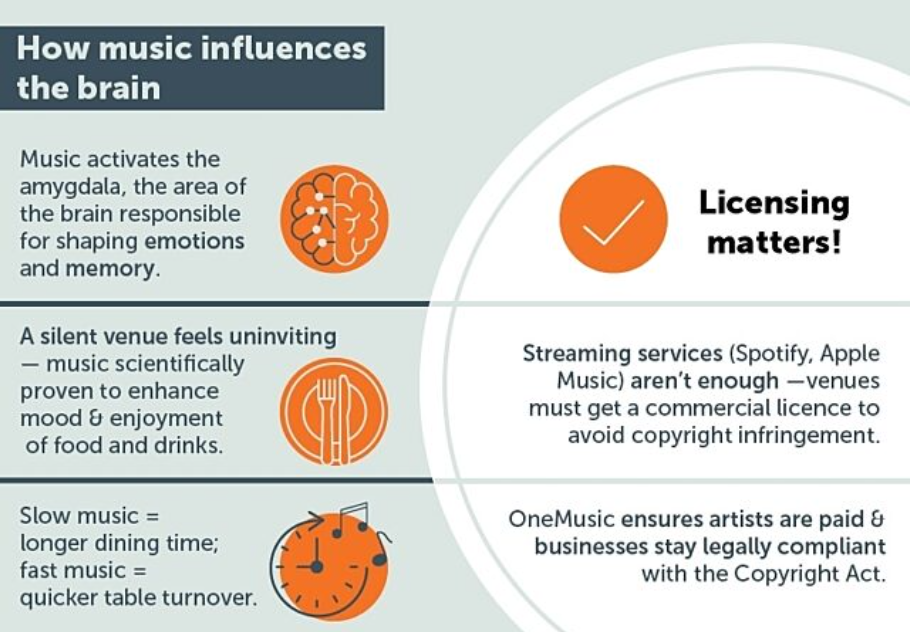
Music hijacks the brain’s ability to process memory to drive diner behaviour from menu choices to the time they spend eating and drinking. Located in the temporal lobe of the brain, the amygdala is the area responsible for evaluating experiences as either positive or negative, repeatable or non-repeatable. This also happens to be the part of the brain that is activated when we listen to music.
As one of the most heavily studied topics in psychology, the link between music and emotion has been extensively documented through decades of brain research to build understanding of the mechanisms behind music’s awesome influence.
The absence of sound during eating causes diners to spend less
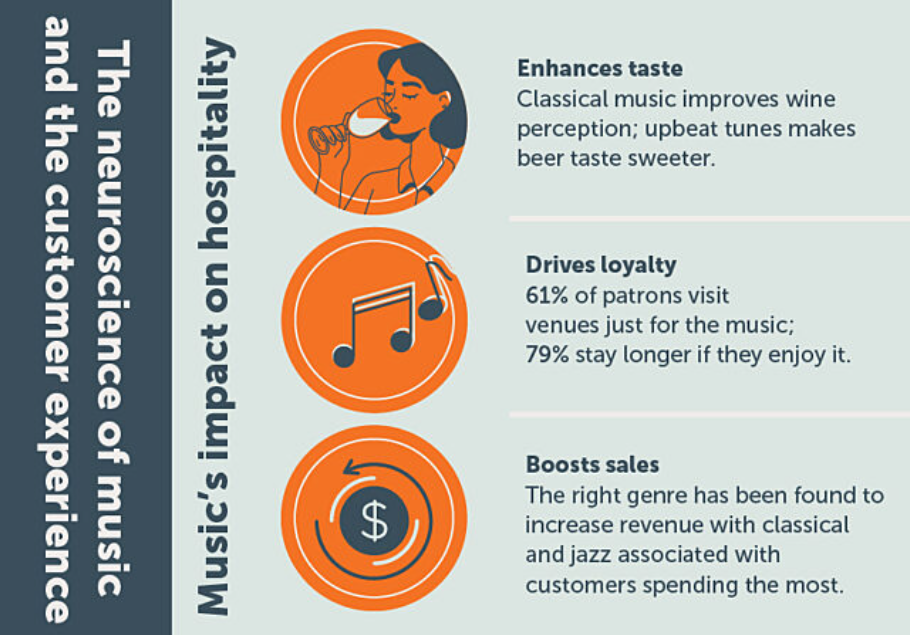
A silent venue is a rare occurrence for a reason - too quiet and the brain registers the lack of noise, making it less likely for patrons to be in the mood for a relaxed meal or drink. Science tells us that the absence of sound during eating causes diners to spend significantly less time on their meal. Unsurprisingly, music tempo also has an effect on eating behaviours: slower music prolongs meal duration compared to fast music.
One study found that the emotional response triggered by music transferred directly to the senses - drinkers who listened to music perceived beer as being sweeter and classical music was found to enhance the taste of wine. In line with background music arousing positive emotions in diners, playing the right song can be instrumental in keeping customers coming back.
In one survey, 61% of customers reported they have visited a bar or restaurant just for the music; 79% say they will stay for longer if the music is good. Even more evidence exists to reinforce the far-reaching influence of music: classical and jazz music is proven to put customers in the mood to splash the cash, fast music encourages diners to eat faster while loud music causes customers to buy more drinks.
Making music central to your brand and customer experience
Great food and service are must-haves for a memorable dining experience, but it’s intangible components like music that also have a big impact on customers.
OneMusic licensee Café Del Mar’s general manager Damian Ball says, “Music sets the atmosphere, creating a relaxed, immersive vibe that aligns with Café Del Mar’s identity. It enhances the overall experience, whether it's for a laid-back sunset cocktail, a night out on the town, or dinner with family and friends, it elevates the mood which invites guests to unwind and enjoy.”
While music can elevate the hospitality experience, customers have a strong expectation that the music matches venue’s brand and theme. This psychological need for brand consistency is so powerful that customers have been found to buy French wines when they hear French music, and German wines when they hear German music.
Drive repeat customers with the right music
“The right music creates the right atmosphere, aligns with the venue’s identity and enhances the customer experience. It can drive repeat visits or create discomfort if not considered carefully,” notes Damian.
Choosing the right song is especially critical if venue owners want to increase sales. One study found that playing a carefully chosen mix of hit songs and less well-known tracks tailored to the venue boosted sales by 9.1%. On the flipside, sales dropped by 4.3% when restaurants played a random playlist compared to having no music on at all.
Whether they’re aiming to get drinks flowing with loud music or encouraging faster table turnover with fast music, venues have endless opportunities to use music to maximum effect. To get the music choice right time and time again, Damian recommends hospitality managers consider the following:
- Genre & style - Match the music to the vibe and audience of the venue, while
taking care to remain on brand. - Volume - Keep it at a comfortable level - background for dining, louder for
lively venues. - Pacing - Adjust the energy throughout the day based on customer mood and
style of offering/event. - Consistency - Update playlists regularly to avoid repetition, while once again
remaining on brand. - Adapt - Listen to customer feedback and adjust as needed.
Avoid music licensing pitfalls
Music and venues go hand-in-hand, but without music licensing, hospitality vendors risk falling foul of the law. To gain the myriad advantages of playing music, venue owners must ensure they have the appropriate music licence on hand.
Unlike when playing music at home, when a business plays music protected by copyright in public for their customers or staff they need to first get permission, or a music licence from the owners of the copyright in that music.
OneMusic has been authorised by the owners of copyright in vast majority of all commercially released music from around the world to give permission to businesses to publicly perform their music.
It is a common misconception that some hospitality venues believe they’ve covered their bases with a paid-for subscription to a music streaming service like Apple Music or Spotify. However, no matter where the music is sourced from, or what you have paid for, a business will still need to pay for a music licence when copyright-protected music is ‘publicly performed’. Hospitality vendors should also be aware that the terms and conditions of digital music streaming services typically only allow you to use that service for personal, non-commercial use.
Purchasing a music licence
Thankfully it’s a quick and easy process to purchase a licence through OneMusic, which is tasked with collecting royalties on behalf of songwriters, recording artists and other copyright owners who make the music .
“Licensing ensures that Café Del Mar is playing its part in ensuring the music we play fairly compensates artists for their work. It helps protect their intellectual property, follows regulatory guidelines, and maintains the brand’s credibility in the industry,” says Damian.
Music as the gateway to an unforgettable customer experience
Neuroscience proves music’s incredible role in shaping customers’ dining experiences. From influencing memory creation to enhancing a gourmet meal, music is an essential tool in hospitality venues simply can’t afford to overlook.
These scientific insights are key to creating truly immersive hospitality experiences that will boost customer satisfaction, lead to more repeat visits, and build a stronger brand identity. All that’s left is for venues to secure the right music through the right avenue - a sound investment for any hospitality operator wanting to take their venue to the next level and beyond.
To find out more about licensing your business, check out OneMusic’s information page for your industry.
Other Articles

Myth Busting OneMusic & Music Licensing Myths
